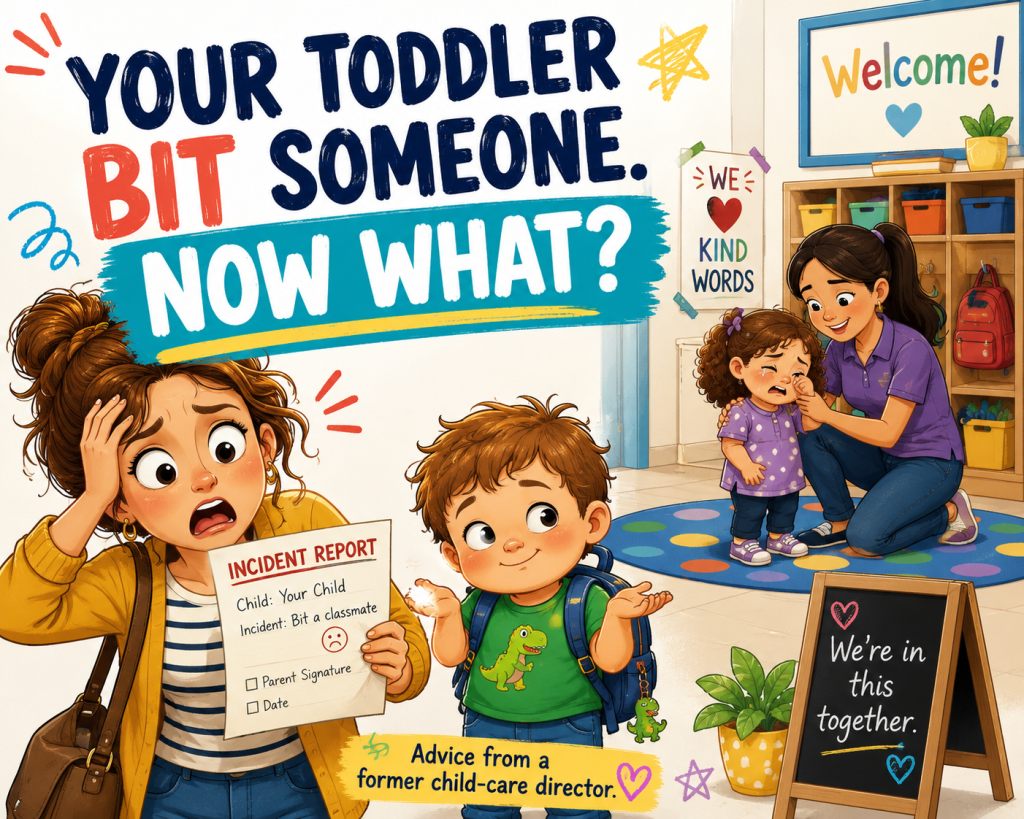
OMG. You get to child care to pick up your child, and there’s an accident report waiting for you to sign.
Your child bit Suzie.
Before you panic—or start wondering where you went wrong—know this: biting is actually fairly common in young children, especially around ages 2 and 3.
Should it simply be dismissed? No. But it doesn’t mean your child is “bad,” either. There are things you and your child’s caregivers can do to help.
Why Do Toddlers Bite?
One of the first things to remember is that young children don’t yet have all the vocabulary and communication skills they need to express everything they’re thinking and feeling.
Think about the last time you were really angry. Have you ever been so upset that you couldn’t find the right words?
Now imagine feeling that way when you’re two.
A toddler may be thinking:
That’s mine! I was playing with it! Give it back! I’m angry! Stop!
But they may not have the language—or the self-control—to say all of that.
So sometimes they react physically instead.
When I was a child care director, I had conversations with both sides: the parent whose child bit and the parent whose child was bitten. Neither conversation was particularly fun!
But one thing I wanted parents to understand was that biting can be a developmental phase for young children. The important thing is how the adults respond to it.
Give Them the Words Before They Need Them
Don’t wait until your child is furious to teach them what to say.
Practice ahead of time.
What could your child say if Mary grabs the truck they’re playing with?
“Stop!”
“I’m using it.”
“My turn.”
“Help, please!”
You can actually role-play these little situations at home.
Young children learn through repetition. When they’ve practiced a response many times while they’re calm, it can be easier for them to use those words when they’re frustrated.
Don’t Bite Them Back
Yes, I’ve heard this advice:
“If he bites you, bite him back. Then he’ll know what it feels like.”
Please don’t.
Instead, be calm, firm and simple:
“No biting. Biting hurts.”
A two-year-old doesn’t need a five-minute lecture. They need a clear limit and an alternative behavior they can learn to use instead.
Teach Empathy, Too
Help your child begin noticing how their actions affect other people.
You might say:
“Suzie is crying. That bite hurt her.”
The goal isn’t to shame your child. You’re helping them gradually understand another person’s feelings.
Sometimes They Need Something Else to Bite
For some children, biting isn’t only about anger or communication. They may be teething, seeking sensory input, or using chewing as a way to regulate themselves.
In those situations, an appropriate item designed for chewing may help. Talk with your child’s caregiver so you’re approaching the behavior consistently.
Catch Them Doing It Right
This part is incredibly important.
Don’t let biting become the only behavior that gets your attention.
When you see your child handle frustration appropriately, notice it.
And instead of simply saying:
“Good job!”
tell them exactly what they did well.
“You were upset when Johnny took the truck, and you used your words. I love how you told him ‘stop’ instead of hurting him.”
Now your child knows exactly which behavior you want to see again.
And Remember: They’re Learning
A toddler who bites isn’t destined to become an aggressive child.
They’re a very young person learning how to handle some very big emotions with a still-developing set of communication and self-regulation skills.
Stay calm. Set the limit. Give them words. Practice when they’re calm. Praise the behaviors you want to see more often.
And if you’re the parent standing at child care holding that incident report?
Sign it.
Take a deep breath.
And know that you are most definitely not the first parent who’s been handed one.
 Little Minds, Big Skies
Leave a comment